

How MoonShine Inspired Cardboard: An Admin Panel Without a Framework
MoonShine UI is a Laravel admin panel package. We took only its language, tokens, components, layout, and built Cardboard in pure PHP 8.5.
Read article →Index
Plain Markdown, one module, no build required.
MoonShine UI is a Laravel admin panel package. We took only its language, tokens, components, layout, and built Cardboard in pure PHP 8.5.
Read article →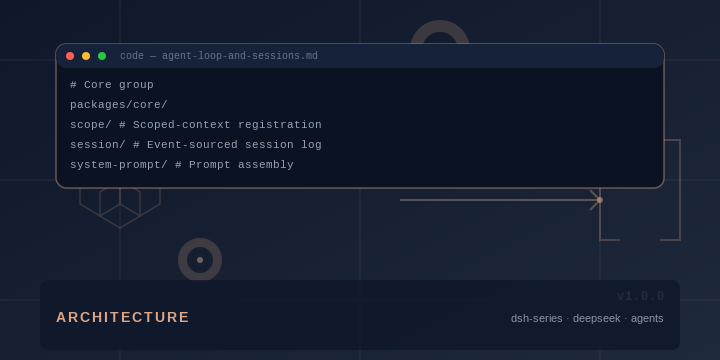
The agent loop in DSH is a replaceable plugin, not a hard core. Sessions are event-sourced ... an append-only log, not state-based. The tool registry is scoped. Let's look at how agents think.
Read article →
Step by step: how to create a plugin for DeepSeek Harness. Service Definition, Provider, Consumer. Effects, events, scoped services. From zero to a working plugin.
Read article →
Cache is a great tool ... but only when you know when to use it and when not to. The story of how we added cache as a rate-limit fallback and why we rejected cache for performance optimization.
Read article →
Every capability in DSH has three roles: Service Definition, Service Provider, Consumer. This pattern lets you swap the filesystem for S3, shell for SSH, or sandbox for Landlock ... without changing a single line in the consumer.
Read article →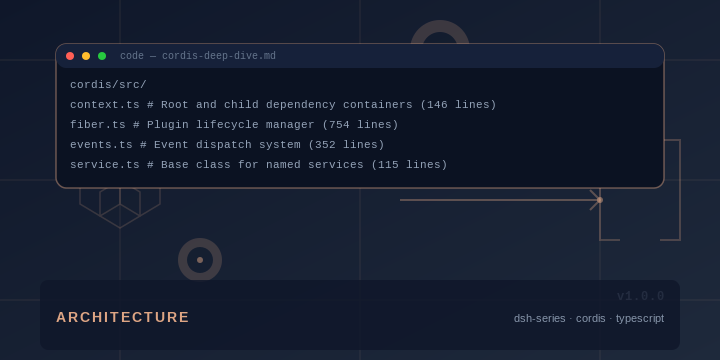
Cordis is the TypeScript plugin framework powering DeepSeek Harness. Fiber lifecycle, scoped services, event dispatch, intercept config. Let's look under the hood.
Read article →
DeepSeek Harness can be the foundation for distributed agents. Capability seams for P2P communication, event-sourced sessions for replication, sandbox for node security. The fridge as an agent server.
Read article →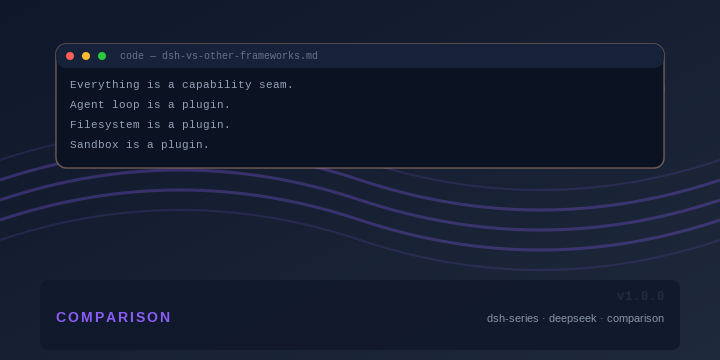
DeepSeek Harness vs LangChain vs AutoGen vs CrewAI vs OpenAI Swarm. Each has a different philosophy. DSH: everything is a plugin, no hard core, capability seams.
Read article →
DeepSeek Harness isn't a framework ... it's a modular operating system for agents. 50 packages, capability seams, event-sourced sessions, sandbox. Let's look inside.
Read article →