
Core Web Vitals in Practice: LCP, srcset, Lazy Loading
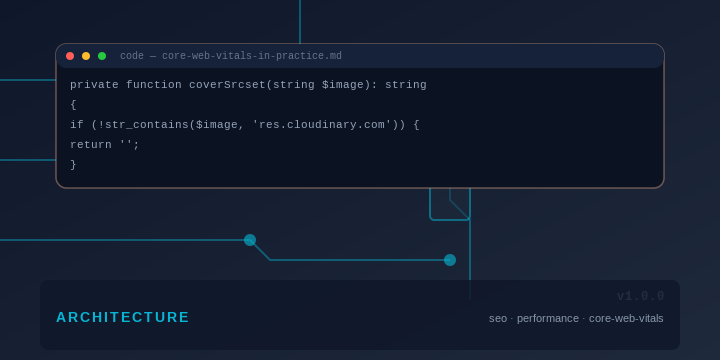
How we optimized LCP via srcset and eager loading, reduced CLS via width/height, and minimized JavaScript for FID.
Read article →Taxonomy
Browse articles by tag.
How we optimized LCP via srcset and eager loading, reduced CLS via width/height, and minimized JavaScript for FID.
Read article →
Cache is a great tool ... but only when you know when to use it and when not to. The story of how we added cache as a rate-limit fallback and why we rejected cache for performance optimization.
Read article →
The final part of the series: why PHP's speed comes from C and from removing layers, how that looks in our stack and what rule we take away from thirty years of the language's history.
Read article →
How OPcache keeps compiled opcodes in memory, what opcache.preload does and when JIT compiles PHP all the way down to native machine code ... part three of the series about why PHP is precompiled like Astro.
Read article →
A debate with DeepSeek about the vision of a super-fast PHP app: why clean PHP with zero dependencies beats Next.js and Astro, why we threw out the cache and got 100/100 on PageSpeed, and what remains of that conversation as the philosophy of our stack.
Read article →
What the Zend engine is, how PHP turns your source code into opcodes and why the whole interpreter is written in C ... the first part of a series about why PHP is really a set of precompiled C chunks.
Read article →
A new series about web performance. Part 1 explains what LCP is, why loading=lazy on the most important image is a betrayal, and what fetchpriority=high and srcset do ... backed by real measurements from this repo (desktop LCP 1.2s → 0.8s, images half the size).
Read article →
Part 2: we fixed the LCP cards on the index, but the article page had its own problem ... a cover image without fetchpriority=high. We show how LCP differs from page to page, what a text LCP element is and why one pattern isn't enough.
Read article →
Part 3: Lighthouse isn't an oracle ... it's a detective that sometimes misses context. We show which audits affect the score and which are just recommendations, why the mobile audit claimed a 63 KiB saving that didn't exist, and how to read the report so you don't fix things that aren't broken.
Read article →