
 · Nativa Dev
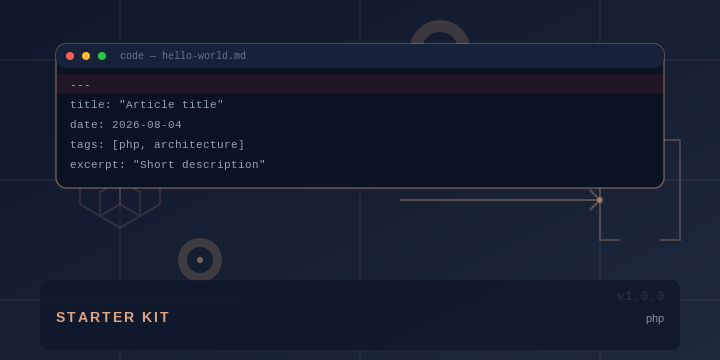
No framework. No Composer in production. No ORM. Just PHP 8.5, SQLite, and attribute-based routing.
This is the problem with most starter kits: too many dependencies, too much magic.
This is the first post in the new minimal PHP 8.5 starter kit. The project is built from scratch as a zero-dependency runtime ... no Composer package in production, per-module SQLite databases and attribute-based routing.
Articles are markdown files
Blog articles live in storage/blog/ as .md files with YAML front matter:
---
title: "Article title"
date: 2026-08-04
tags: [php, architecture]
excerpt: "Short description"
author: Nativa Dev
category: Architecture
author_email: admin@example.test   # optional ... links to a users account
---
The article body is plain markdown. Articles are indexed dynamically from the directory ... no manual registration.
The optional author_email links the author with a real users account: if the email matches an active user (case-insensitive), both the index and the article show their name from the users database (renaming in /mark/users propagates automatically) ... with an avatar and a link to /authors/{id}. If it doesn't match or the account is inactive, author is used instead. The email is never shown in HTML.
The avatar is set in /mark/users (image upload); without an avatar a placeholder with the initial is rendered. Avatars are self-hosted in storage/uploads/ and served via /storage/uploads/{path} (whitelisted types only, no traversal).
The starter kit remains a foundation, not a framework. It gives you the minimum viable structure: routing, middleware, auth, admin panel. You build the rest.
Minimal means you understand every line. No magic, no hidden behavior, no framework opinions.
A starter kit should be read, not just used.
→ Getting Started: install, migrate, seed, build → Adding Modules: how to port feature modules
Sources
- PHP.net, PHP: Hypertext Preprocessor: official PHP website
- PHP-FIG, PSR Standards: PHP Framework Interop Group standards
- SQLite.org, About: SQLite embedded database
- Vite, Why Vite: why Vite instead of Webpack
- Nativa Minimal, Getting Started: official getting started guide
Comments (0)
No comments yet — be the first to react.